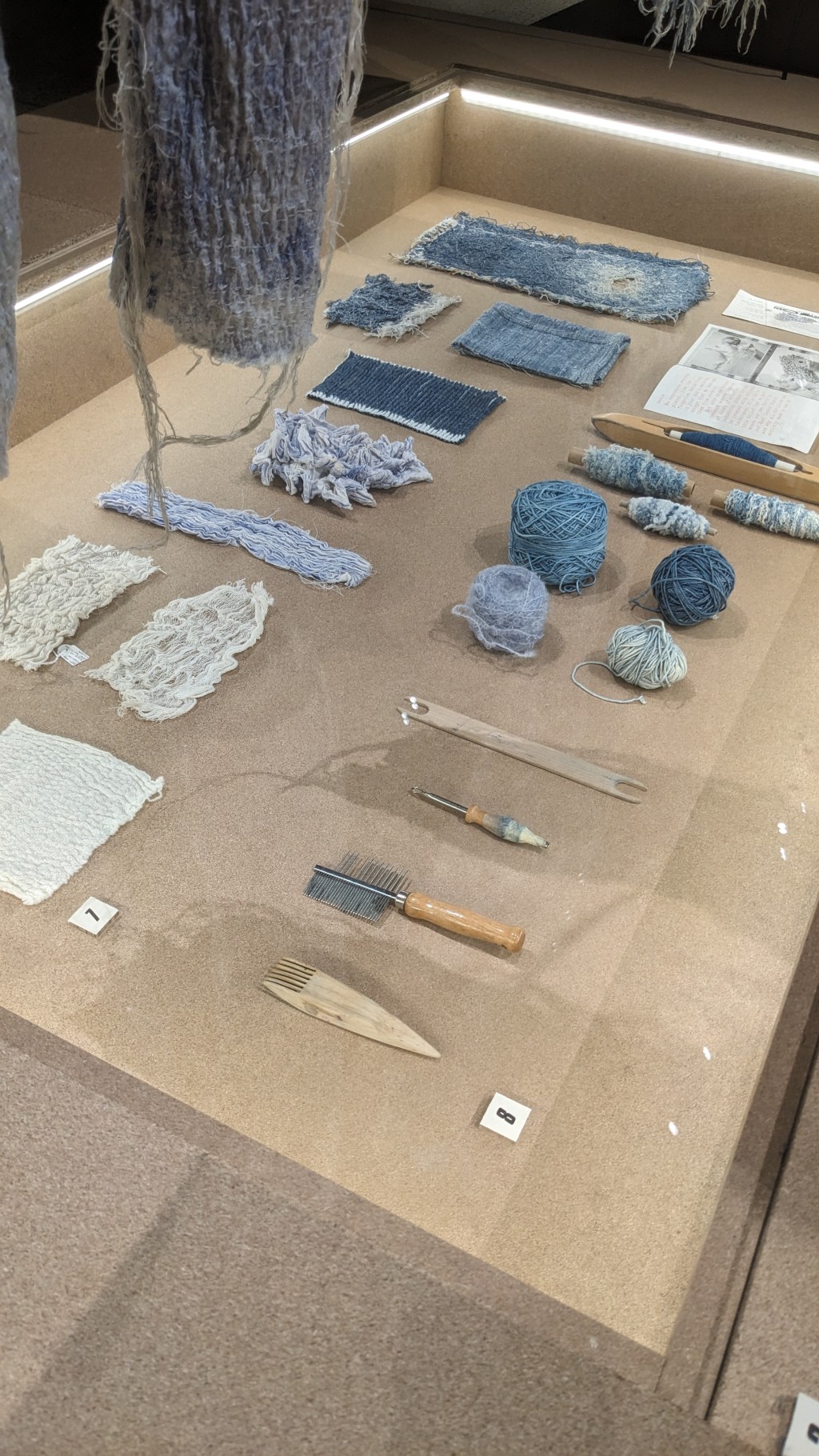
I am back, year 2 of my part time Masters. It’s been a slow and tricky start, with many pep talks to try and get myself in the headspace for the year ahead.
So jumping straight in, this module is a continued development of my research from last year which will result in a proposal for my final project. I feel like my ideas are still on an outwards and expanding trajectory which I now need to bring together and refine.
My concept to date has explored :
- Addressing the industry – challenging consumer consumption around fast fashion and bring value back to unwanted garments
- Advocacy and activism – the spirit of defiance and the punk ethos. Going against the mainstream through peaceful protest with a fun and mischievous twist. Communication through craft.
- Challenging gender stereotypes by subverting domestic objects
- Recycling and repurposing through :
- Weaving
- Knitting
- Patchwork
- Collage and layering
- Texture and shape
- Sashiko and Wabi Sabi
Thinking about what’s next for my project, denim is the material I’d like to continue working with. I originally used it for my ironing board loom and knitting, it feels like it is a versatile textile that fits well with the values of my project when reflecting on the environmental consequences of fast fashion and the declining quality of our clothing.
“Approximately 2,900 litres of water, along with huge volumes of chemicals and energy, is consumed in the production of a single pair of jeans. When it is scaled up to the number of jeans produced globally, the environmental impact ranges from wastewater discharges to harmful gas emissions.” Saha, S (2022).
In 2024, Diesel created a visually impactful (albeit a stunning, eerie, immersive denim landscape) that highlighted the sheer volume of waste that is out there by using 14,800 tons of denim waste to set dress their runway. Whilst it’s great that mainstream brands are bringing this problem to the forefront, we can’t overlook that they are have also been leaders in contributing to the industry of overproduction and overconsumption.
That being said, Diesel have a variety of initiatives that support sustainability, production and circular fashion, reviewing ways in which denim is manufactured and by creating it’s own 2nd hand marketplace to resell their jeans.
I also like the idea of working with denim because of the connotations that jeans have held within society and culture. In the 1960’s jeans were worn by youths and seen as anti-establishment and in the 70’s became uniform of the working class, known for being hard-wearing work wear. Nowadays, jeans are a staple in most people’s wardrobes worldwide, there are a multitude of cuts and shapes that rotate in popularity depending on what is worn on the catwalks for the season ahead.
Alongside denim, I also want to continue playing with the wires from broken domestic appliances I have been collecting. So far I have knitted and woven them but I feel like there is a lot more experimentation that I can do with them.
References
Main image – Faustine Steinmetz on display at REBEL: 30 Years of London Fashion. 16 September 2023 – 11 February 2024. The DESIGN MUSEUM, London.
Sulagna Saha (Oct 2022) The Need for Denim Recycling and its Challenges. Fibre2Fashion. https://www.fibre2fashion.com/industry-article/9474/the-need-for-denim-recycling-and-its-challenges#:~:text=According%20to%20a%20study%2C%20approximately,discharges%20to%20harmful%20gas%20emissions.
Dezeen (24 September 2024) Diesel creates a runway with over 14 tons of denim waste. Youtube https://www.youtube.com/watch?v=TwjzFrV3BHU
 kellyfacekelly
Leave a comment