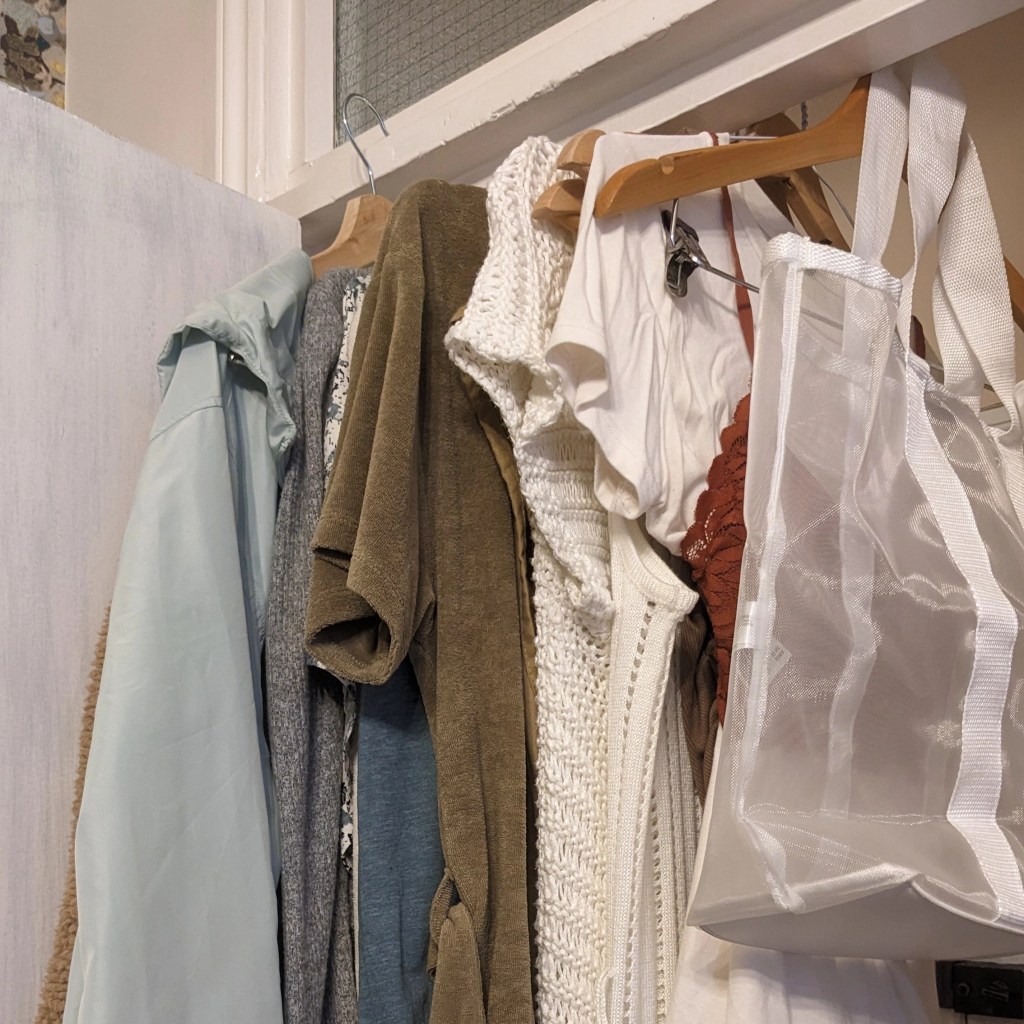
Did you know only 20% of clothes donated to a charity shop get sold? The volume of donations and the need to keep stock moving / lack of space means that most donations end up getting purchased by textile bins that buy based on the weight.
Referencing ‘The Story of Stuff’ and Crouch, C. & Pearce, J. concept of ‘a wicked problem’(2012), once we donate our clothes that isn’t the end of the clothing lifecycle. We donate to charity on the premise that we’re doing something good or contributing, when actually we are relieving ourselves of the burden or guilt of throwing something away and in turn make it someone else’s problem. This is when our clothes enter the next phase of the dysfunctional chain.
Once clothes are rejected from charity shops stock and purchase by textile recyclers, they may get purchased by other second hand resellers, be incinerated, or be exported to the global south. Incineration is just releasing more toxic chemicals into our atmosphere, exporting to the global south is typically clothes going into landfill, polluting natural environments and ecosystems. Addressing one of these problems doesn’t solve the larger scale system, which is broken. It just redirects it to another waste stream or creates new ones with its own pitfalls and inadequacies.
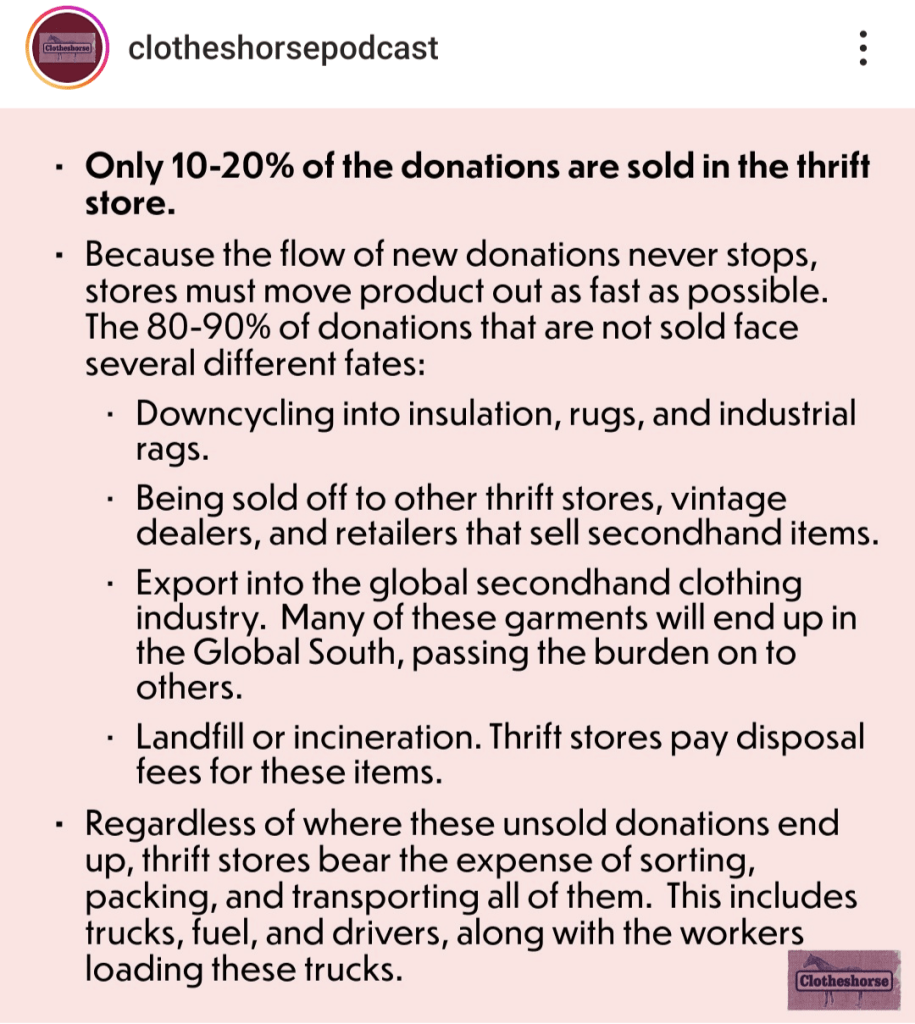
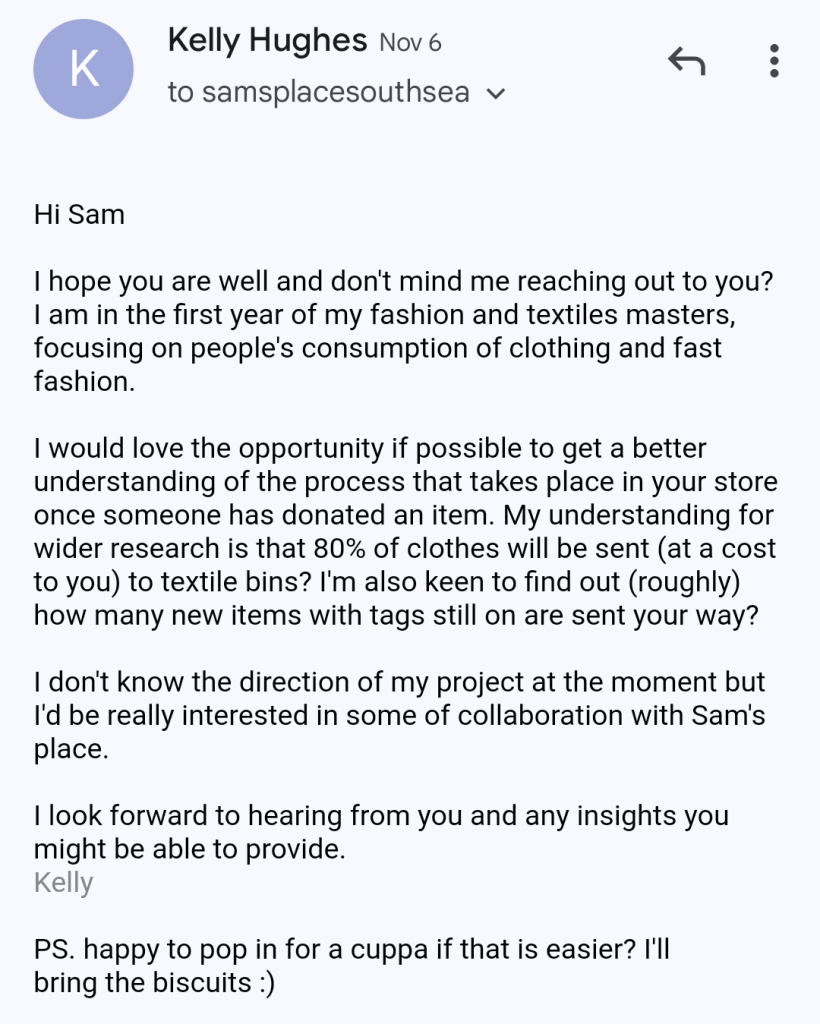
This article isn’t here to point fingers or dismiss charity shops which play an important role in communities. At the start of November I reached out to my favourite local charity shop and had a great chat with the team about the journey of an item once it’s been donated.
We discussed the volume of fast fashion brands such as Primark, Shein and Boohoo being donated, as well as the increase in the number of clothes being donated that still have tags on and have never been worn.
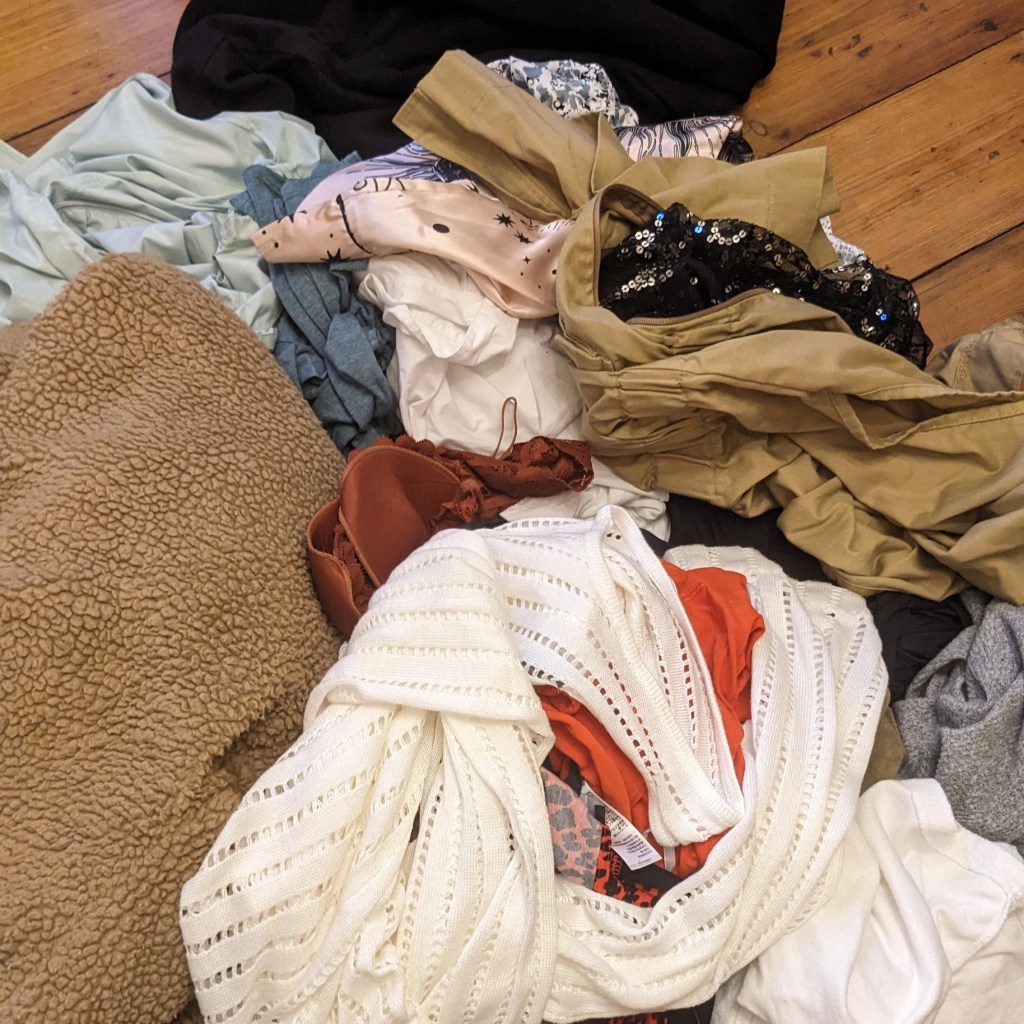
Following our meeting, Sam’s Place offered to give me a bag of clothes that they weren’t going to sell for me to use in my project. This consisted predominantly of Primark, Shein, Boohoo and PrettyLittleThing and included t-shirts, bags, bras, jumpsuits and coats.
I like the idea of subverting fast fashion and these garments that have been deemed to have no value because they’ve already been discarded and give them worth by creating something new.

References
McCarty, AL. [clotheshorsepodcast]. (2023, September 4). Are resellers and the rise of online secondhand shopping responsible for the higher prices at thrift stores? Instagram. https://www.instagram.com/p/CwwE4eesfoH/?igshid=MzRlODBiNWFlZA%3D%3D
What do designers and researchers do? Thinking, doing and researching – In Crouch, C. & Pearce, J. (2012). Doing Research in Design. Bloomsbury
 kellyfacekelly
Leave a comment