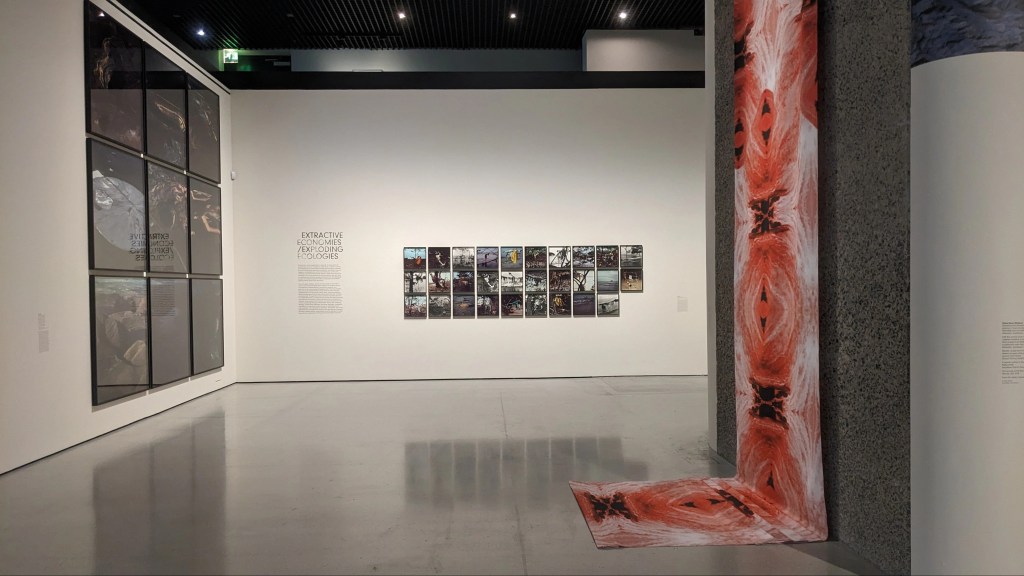
I attended RE/SISTERS : a lens on Gender and Ecology at the Barbican. Featuring female artists, the exhibition explores how “Ecofeminism joined the dots between the intertwined oppressions of sexism, racism, colonialism, capitalism, and a relationship with nature shaped by science.” (Barbican, 2023). The concept is that the oppression of women and nature are interlinked and ecofeminism is creatively resisting hierarchical power and social structures.
Highlights :
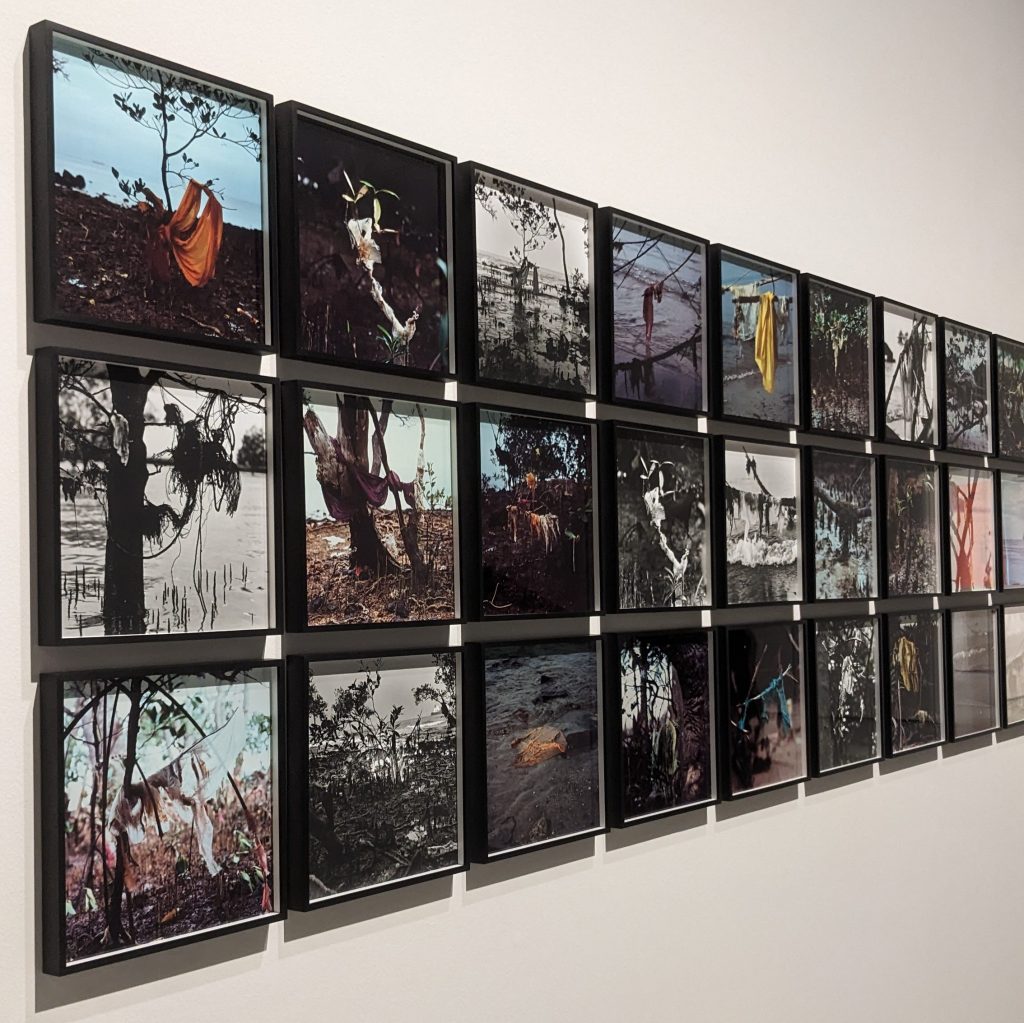
Simryn Gill’s Channel (2014) is a series of photographs of treelines and beaches strewn with plastics and fabrics that have been washed up on shore. Not only are they visually beautiful but they show how nature and manmade items are now interwined, the materials and the trees look like they exist as one rather than polluting and spoiling the environment. The series intends to highlight how extensive production, industry, trade and waste is globally which has a relatedness to ‘the story of stuff’ and that linear system.
“Entangled in roots and branches, the … ‘residue of living’ resembles clothes drying on a washing line, hinting at the unrecognised importance of both domestic and environmental care” (Barbican, 2023).
I found this sentence very evocative. This research keeps leading me back to the domestic sphere that women exist within. That juxtaposition between post war era women washing, drying and ironing clothes, the care that went into cleaning, mending and maintaining them versus the throw away culture that exists now. I have this image of women hanging the trash out to dry.
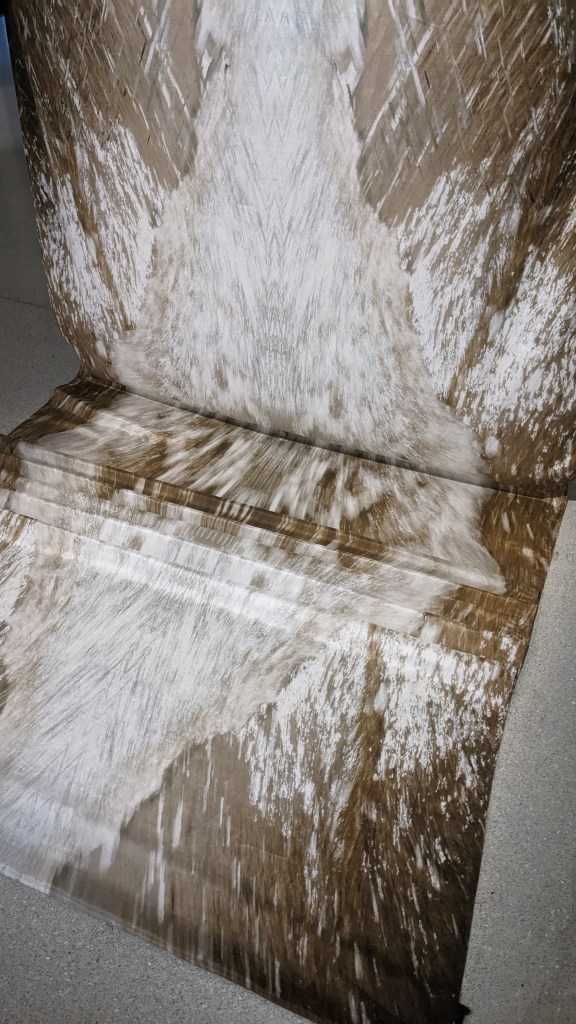
Carolina Caycedo’s Water Portaits (2015- ) are striking photo collages printed onto silk, canvas and cotton. Used to depict man’s interference of rivers and waterways, intervening and disrupting natural resources away from nature, these fabrics represent water in motion and have been installed to cascade, fold and flow through the exhibition signifying the human involvement in controlling and disrupting the flow.
“To view these bodies of water as life-sustaining, life-embracing, other-than-human living organisms, and not just as resources for human extraction… Rivers are ‘the veins of the planet’.” (Barbican, 2023).
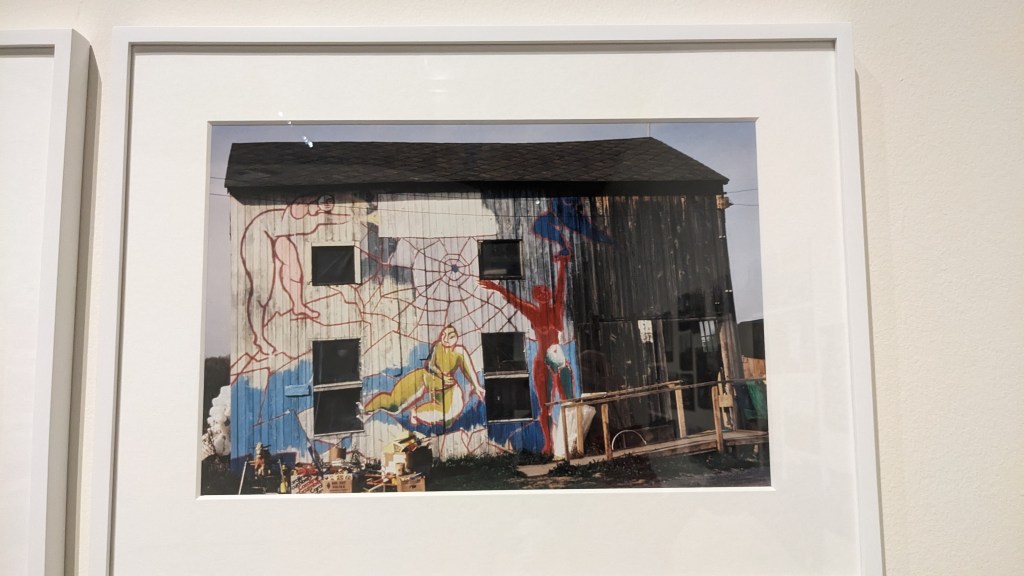
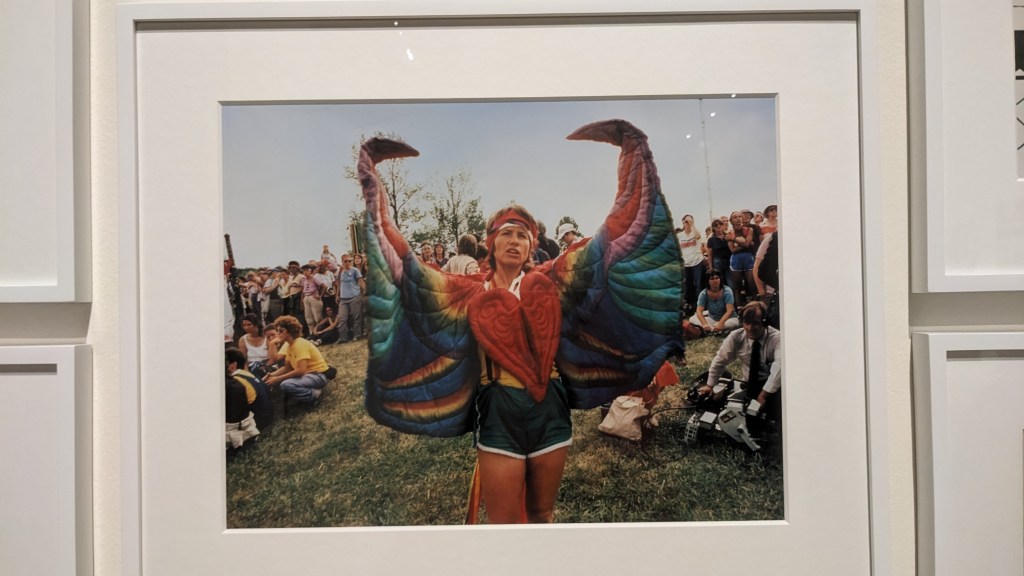
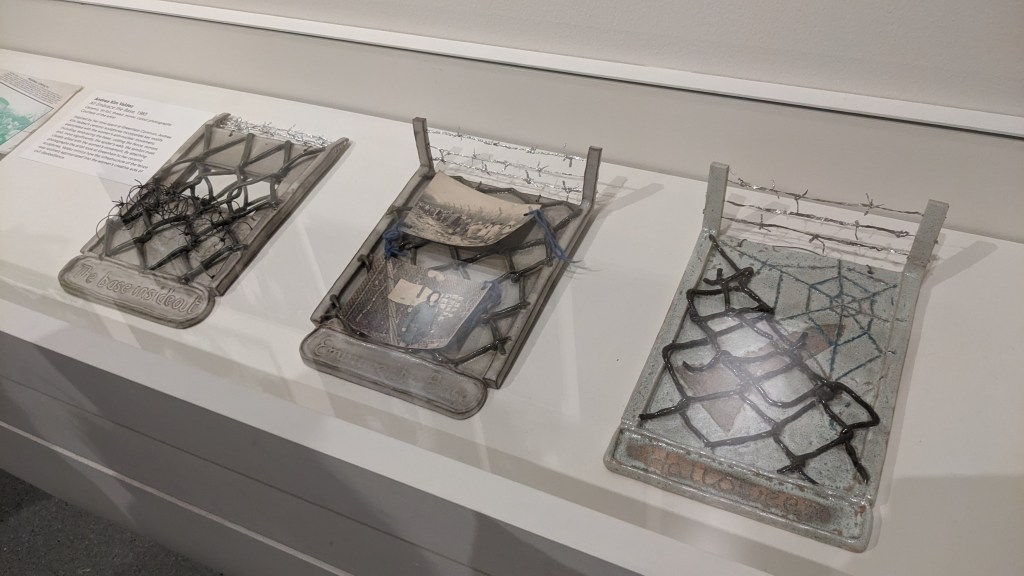
I was thrilled that a large part of this exhibition was dedicated to the photography and art of Greenham Common. Being able to see the prominence of the spiderwebs and chain link fences continue within the literature and illustrations that were on display as well as the camaraderie and community that was captured in the photography documenting the protest. And how through peaceful protest, creativity and creation can be at the forefront and integral in communicating change.
“Women and other oppressed communities are at the core of these [environmental and political] battlegrounds, not only as victims of dispossession, but also as comrades, as protagonists of the resistance.” (Barbican, 2023).
Feminist Land Art Retreat, Heavy Flow (2015) is a video that portrays a volcano erupting, with lava cascading through the countryside with no barrier stopping anything in its path, the devastation to anything man made existing within the landscape. Nature reclaiming its surroundings. In contrast, the voiceover is of a woman instructing on how to position yourself in the world, as a professional, an influencer, what is it you’re trying to achieve and how do you leverage that?
“Whether you like it or not, you’re going to get typed. Why not take advantage of it? Once you’re famous, you can play any type you want, but until then, take the path of most success and least resistance.”
There is a strong juxtaposition of the masculine and feminine in this piece. Nature reclaiming the land and women reclaiming their bodies. But it also makes light of contemporary, perceived feminism and the inauthentic way women are adhering to exist in the world still within rigid social structure and beauty standards that rely on female insecurities.
Feminine : Nature, volcanic energy, fire, “heavy flow”
Masculine : Destruction, infrastructure, farming, societal expectations of women to conform
I’ve been ruminating on why it is women are perceived to advocate more for the environment than men. I wonder whether it has anything to do with the seasons that nature transitions through and the parallels with the cycles of people who menstruate.

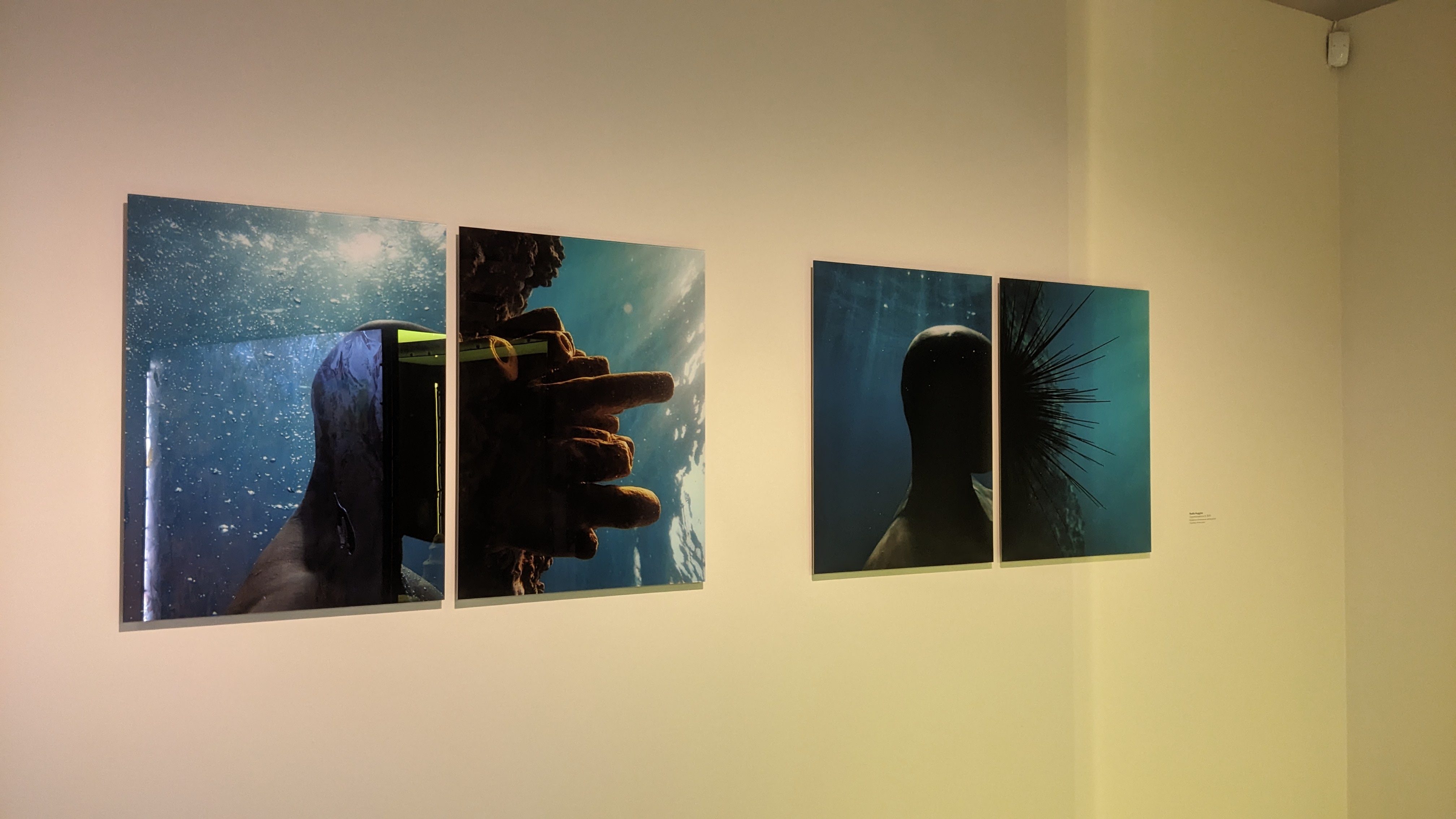
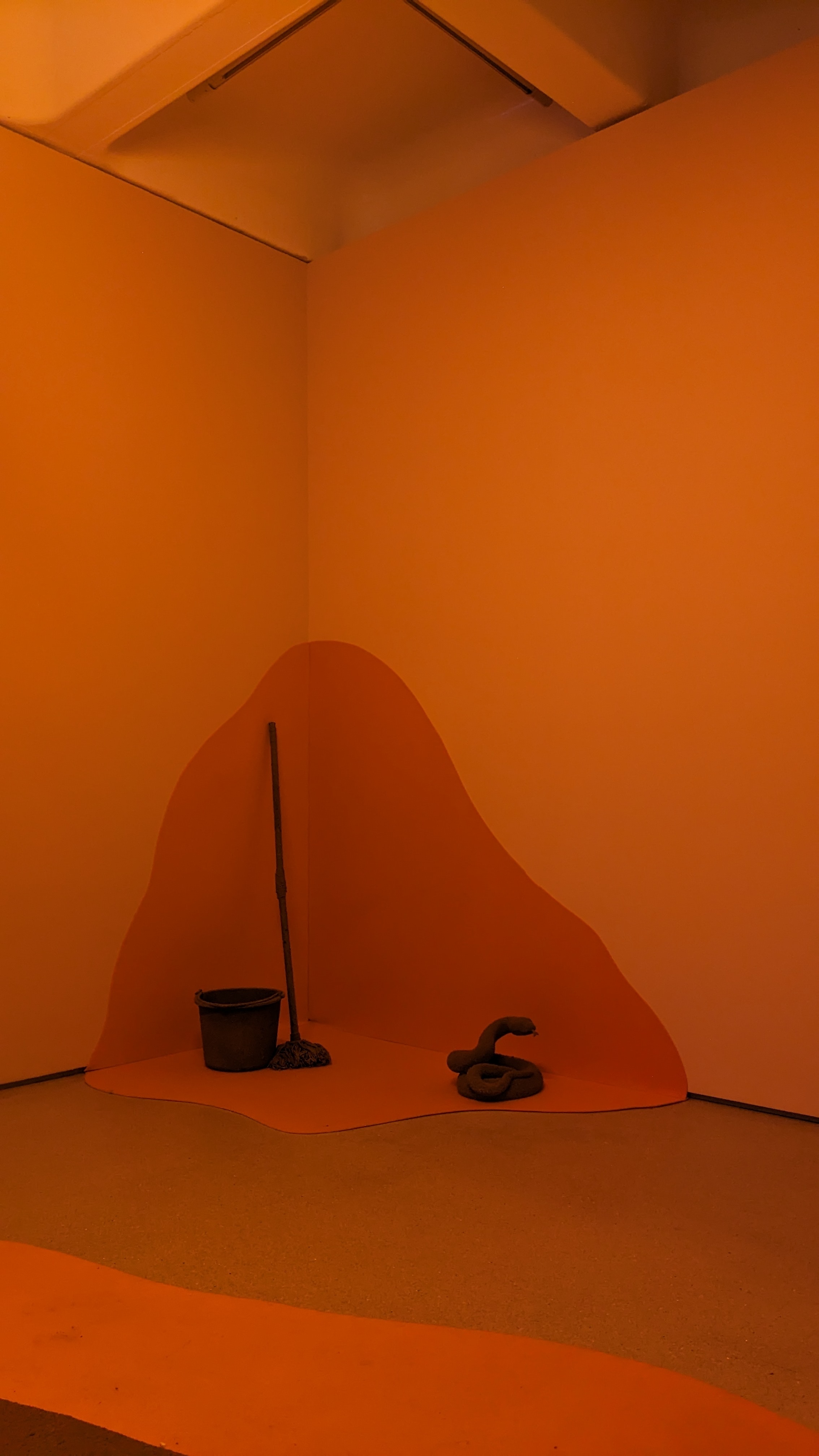
Top left – Monica de Miranda, Salt Islands (2022),
Bottom left – Nadia Huggins, Transformations 1 (2015)
Reference :
RE / SISTER : A lens on Gender and Ecology [exhibition]. Thu 5 Oct 2023—Sun 14 Jan 2024. Barbican, London. https://www.barbican.org.uk/ReSisters
 kellyfacekelly
Leave a comment