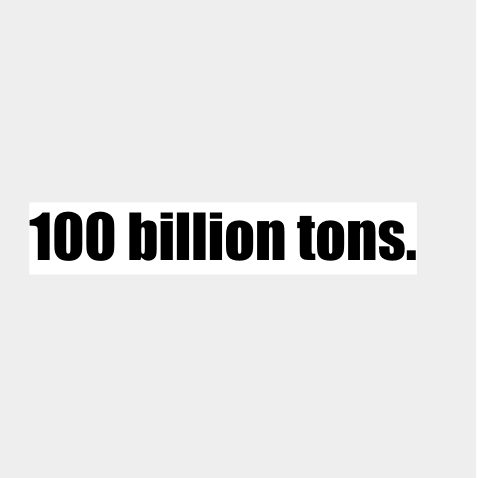
100 billion tons.
I’ve been trying to wrap my head around this weight, to give it a tangible meaning.
714 million blue whales
444 million Statue of Liberty’s
I actually can’t comprehend this as a physical weight.
There are 100 billion stars in the Milky Way. That’s pretty awesome.
But that equates to a ton of clothes per star…. per year.
My brain wants to implode.
100 billion tons. How do you communicate that to people?
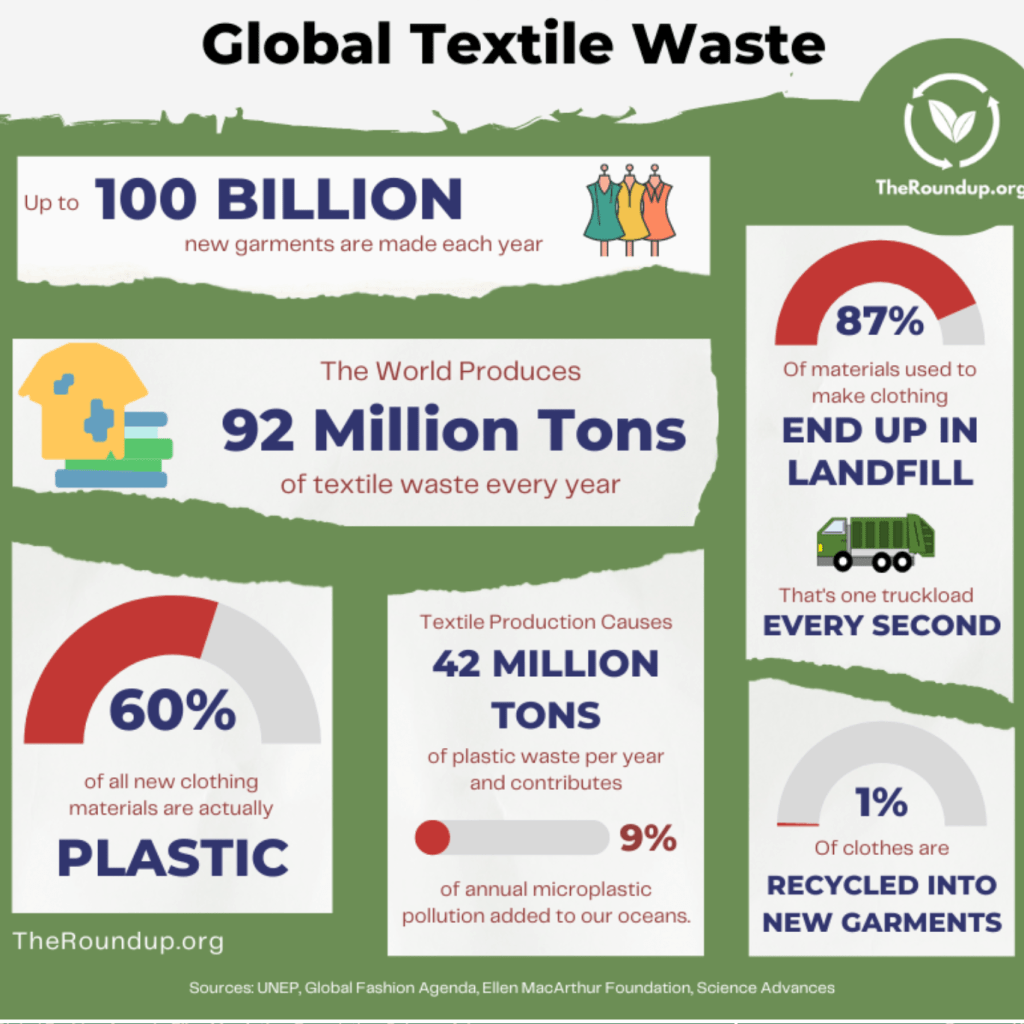
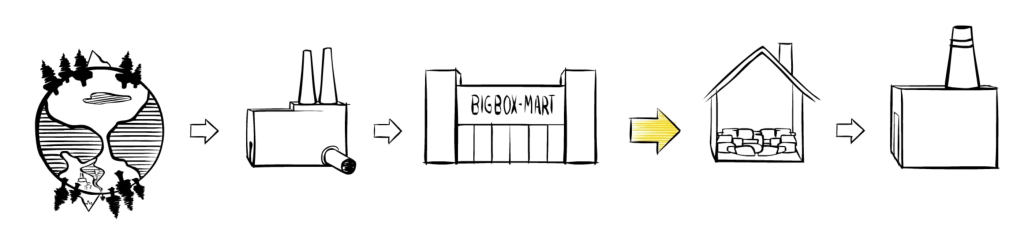
One of the things I took from The Story of Stuff was around $4.99 not being the actual price of something – how can it be with mining, machinery, labour, overheads, transportation, marketing. So if we’re not paying the price for the stuff we buy then who is? The planet, the climate, the environment, the people in the global south. It’s mind blowing when you start to unpick it. And then we just throw it in the bin. 92 million tons of it. Incinerated or buried in landfill.
We live in such a wasteful society, it’s terrifying.
I listened to a Steven Bartlett podcast recently and his guest, Dr Tara Swart said something that really resonated with me :
“I’m really into indigenous wisdom at the moment, and one of the things that I’ve learned about the first American’s is that when they make a big decision for their community, they imagine the impact of that decision seven generations into the future. We don’t even think one generation into the future. We just think about… what’s going on right now. We don’t even really think about our own future some of the time.”
DOAC, 2023, 44.46
There is a great sadness in this. It’s true for me which is disheartening because I do try to live more sustainably, to be more planet conscious but I’d confidently say the majority of my decision making doesn’t have future proofing strategy at the heart of it. Even writing and reflecting on this, I’d say the motive for me is protecting the Earth and its harmogeneous ecosystems. I’m not so worried about people, because people have created these processes and this mess without any compassion for the environment or the people living in it.
100 billion tons. It’s just so unnecessary. I wonder what would happen if we enforced a fallow year on garment production? We permit the trees to just be and don’t pour chemicals and microplastics into our oceans. We don’t produce, instead protect and preserve. It loops nicely back to the question of subversion. Let’s subvert consumerism and capitalism. I keep coming back to this make do and mend sentiment of the war time era, when textiles were rationed, people learned to repair and restore their clothing, learned how to refashion existing items into new garments, as Leonard puts it “there is no value of shifting and preserving anymore” (2009).
Infographic : Ruiz, A (2023, April 11) 17 Most Worrying Textile Waste Statistics & Facts. https://theroundup.org/textile-waste-statistics/
References:
Leonard, A. (2009, April 22). The Story of Stuff [Video]. YouTube. https://www.youtube.com/watch?v=9GorqroigqM.
Bartlett, S (2023, September 25) The Diary of a CEO with Steven Bartlett. No.1 Neuroscientist : Why you should always look into someone’s left eye! & How stress leaks through skin, is contagious & gives you belly fat! Dr Tara Swart. Podcast.
 kellyfacekelly
Leave a comment